


Thorens
If you want to rediscover records, or invigorate an existing turntable based system we have some great analogue options for you. Despite the market dominance of CD there is still a significant number of new vinyl records being produced and a huge reservoir of preowned LPs out there.
Archived page: January 2016
– Hop over to our Analogue Options for up to date information on new turntables like the cool new Wax Engine
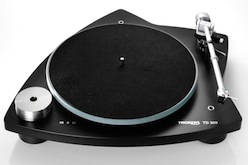
You can get better sound out of records than has ever been possible before and we still think that if you compare a new CD with a new vinyl pressing the record sounds better. And when you look at the burgeoning DJ/Dance music phenomenon it is clear records have a great future. And that there are still companies out the that are working to make better quality analogue products.
Our primary source of music at home is still a turntable – we’ve recently moved from our long loved Linn LP12 to a Well Tempered Amadeus which proved to be a huge improvement. It’s not that we don’t like the sound of the latest CD players like Meridian, it’s just that we have a very big record collection and are still buying new vinyl records. We know a whole lot about record player set up and what sounds good because its what we enjoy.
If you want to set up a new record playing system today you are spoilt for choice. We have listened to and sold many turntables over the years. What makes a system sound good comes down to some very simple principles – the quality of engineering and the materials used being most important. A record player is inherently simple – it just has to go around at a constant speed, and allow the stylus to do its job in terms extracting information from the groove of the record.
The cool thing about analogue is that there is an infinite amount of information on a LP record. The better the record playing system, the more you’ll hear.
Our first choice for record players is actually the longest established. Thorens started in the music business in 1883. By 1903 they were building Edison style phonographs and then it was all ahead from there.
Today’s Thorens turntables are a product of tremendous accumulated experience and engineering expertise. The best thing is that they have continued to develop new models and now have an extensive range for you to choose from.
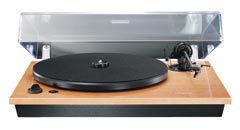
Starting point is the fully automatic 2 speed TD158 at just NZ$ 675 complete. Then the TD190–2 at NZ$ 975 including the Ortofon OM10 cartridge and 3 speed for those of you also want 78. Next step – and well worthwhile with an immediate lift in sound quality and a rather fetching gloss finished wooden plinth on black piano lacquer – is the TD240–2 at NZ$ 1,325 also 3 speed.
The Thorens TD158 has the advantages of automatic operation, and overall construction which translates to better sound making it worth the little extra. Projects range of models extend into similar territory to Thorens but there are important differences at each level. We can outline the distinctive aspects of each design for you and help you make the right choice.
The top of the Project range is at about NZ$ 2,500. At this level our two top picks are the Simplex – NZ$ 3,000, a new model from Well Tempered and the Thorens TD 309 – NZ$ 2,395 Tri-Balance turntable.
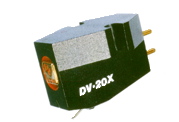
The entry level Thorens come with well matched cartridges included. However it’s worth considering going a little further – the Ortofon 2M Red is a reliable improvement at NZ$ 180, or for the TD240 it is possible to go a little crazy and have a lot of fun with the latest Dynavector 10X5 (NZ$ 650) moving coil which we find particularly tasty.
As you move up through the models it becomes worthwhile to consider better cartridges – there are a number of very good options out there but in terms of value for money and consistency we thing the Dynavector Moving coils are the ones to beat – they have continued to develop and evolve and we know from experience that they are broadly compatible and free from idiosyncrasy.
Which neatly brings us to phono stages. It’s far to easy to underestimate the importance of a quality phono stage – people can often spend significant amounts on a cartridge which, like it or not, will be wearing from day one. Yet they will still feed this signal into either an inbuilt phono stage of limited performance or some low cost step up device.
The Cambridge 651P at a paltry NZ$ 299 is good enough to take seriously and better than many inbuilt stages.
Years ago we tortured ourselves looking for a preamp for our home system – it had to be seriously good on vinyl as that was our primary source. We eventually settled on the Rotel Michi RHQ10 which is still in place and to be honest we’ve not been tempted to change. Every other phono stage we get through comes up against this (which might be a little unfair given it’s cost and the fact that it has a full variable output so runs direct into any power amp)
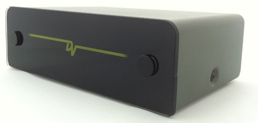
Nevertheless we admit to being highly taken with the diminutive Dynavector P75 phono stage, NZ$ 995!. It’s no bigger than the Project but that is the only similarity. Now in Mark 2 form and far more sophisticated in every way and right at the cutting edge of phono stage design, this is the one to beat. The Dynavector P75 works on 3 levels. Firstly for either Moving Magnet or high output coil cartridges, it provides the right step up to line level. Low output moving coils are more demanding and the P75 makes the most of these with a vanishingly low noise floor and exceptional detail retrieval plus the ability to be fine tuned for cartridge loading. Finally for the very best sound – especially the Dynavectors, the Patented Phono Enhancing Circuit designed by Dr Tominari, to dramatically improve the performance of low output moving coil cartridges.
Since then Well Tempered have produced their RIAA phono stage – another favourite of ours that performs well beyond it’s NZ$ 500 price tag. Then if you are serious about your phono reproduction look no further then the nothing short of stunning phono amp from Pure Audio that is gaining accolades the world over.
The Terrace Houses
217 Stuart Street
Dunedin 9016
New Zealand
NZ Toll Free
Phone
Cell Phone
Mail
0800 909 101
(+64) 03 4790 444
(+64) 021 963 321
info@totallywired.co.nz
Direct Contact
John Ransley and Carolyn Guytonbeck are the principals behind Totally Wired. It’s our own business and we take pride in building something worthwhile.
If you want to contact us directly per mail: